
Many manufacturers assume that high-strength, low-alloy (HSLA) steel isn’t strong enough for cylindrical parts. That may be the case with other foundries — but not with Spuncast.
By combining centrifugal casting with the proper secondary processes and decades of foundry experience, Spuncast produces a reliable, repeatable HSLA Steel. It’s HSLA that can meet the specs of the most demanding industries, all with cost efficiencies that extend beyond the purchase price.
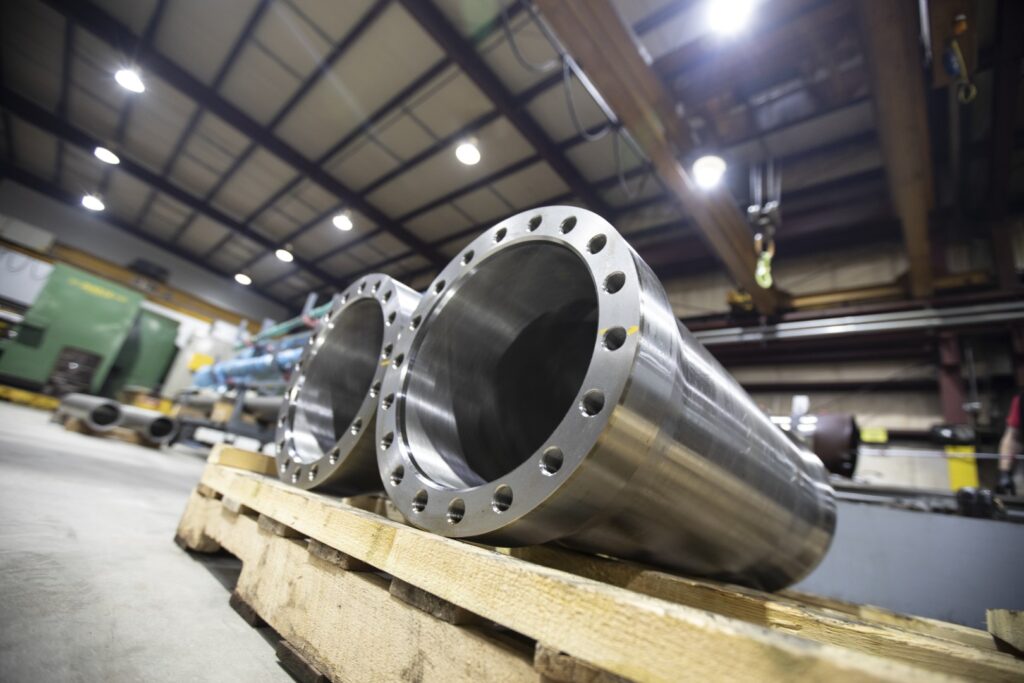
Spuncast’s centrifugally cast HSLA tubes have built-in savings
Our approach starts with the process our foundry was built for: Centrifugal casting.
The centrifugal casting process creates denser and less porous material, where most of the metal can be recovered. That means less waste. In addition, the flexibility of centrifugal casting means your HSLA steel part can be consistently and efficiently recreated.
- Low scrap rate
- Increased ductility and toughness
- Efficient repeatability
Spuncast is one of the few foundries with extensive experience with HSLA tubing. It’s why we’re known for producing HSLA tubes with mechanical properties that match or exceed other (and more costly) carbon steels.
Secondary processes improve performance and other production efficiencies
Secondary processes like heat treating and CNC machining can enhance the properties of HSLA steel to the same levels as a forged equivalent and, in some cases, even exceed it.
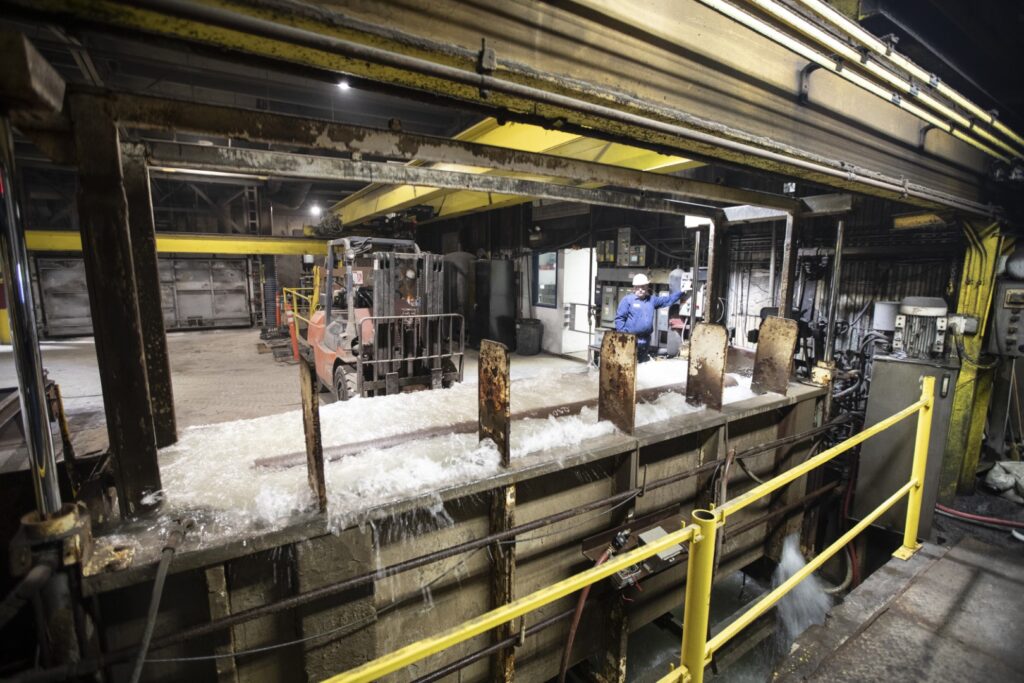
Heat Treating
With the proper heat treatment (and the right expertise), the strength, hardness, toughness, ductility, and corrosion resistance of your HSLA steel will improve. Spuncast applies the proper heat treatment based on your requirements:
- Quenching and tempering to create better balance and stability.
- Annealing for restoring ductility and allowing additional processing without cracking.
- Normalizing to provide uniformity and a fine-grained structure.
- Stress Relief to reduce the risk of unintended dimensional changes.
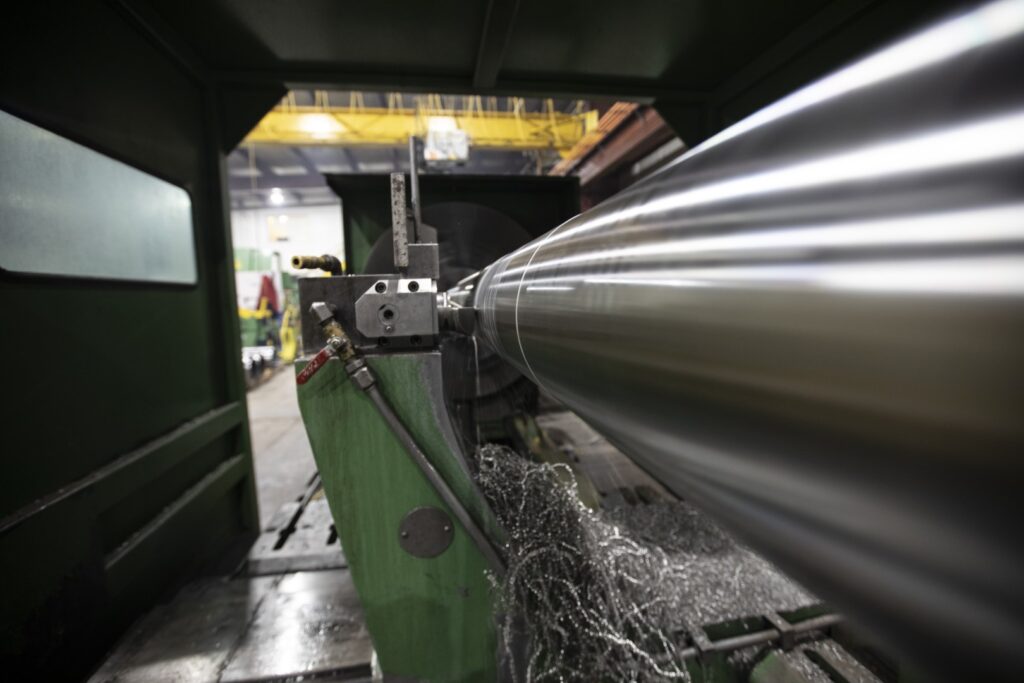
CNC Machining
CNC machining removes unneeded metal fast and selectively, and it’s a finishing process that works especially well with HSLA steel because it:
- Requires fewer steps to deliver far more complexity
- Creates highly repeatable components accurately
- Adds improved performance to the design
- Eliminates unnecessary waste
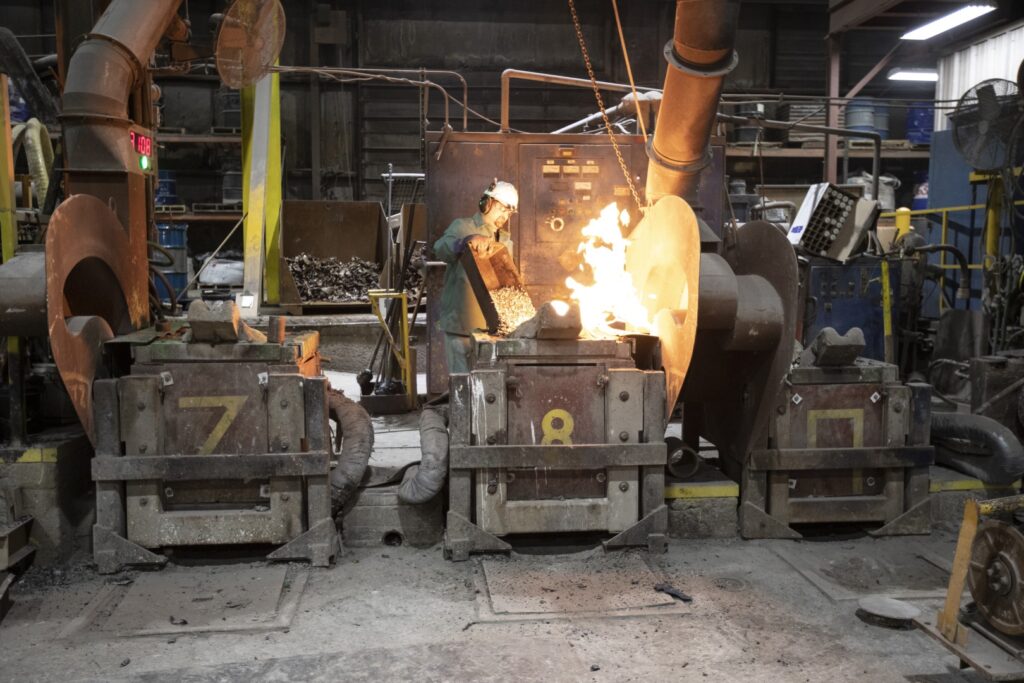
Producing the grade you need with the specs to match
A Spuncast centrifugal cast HSLA steel compares to the following industry standards:
| Spuncast Alloys | N-1 | 6N | 7Q | 10B | 13Q | 14Q | 15A | C5 |
|---|---|---|---|---|---|---|---|---|
| Similar Alloy | 1020 | 4020 | 4130 | 4330 | 8620 | 8630 | 52100 | T5 (AISI501) |
| Chemical Specifications | ||||||||
| Carbon max | 0.25 | 0.35 | .25-.35 | 0.30 | .15-.25 | .25-.35 | .95- 1.10 | 0.20 |
| Manganese max | 0.75 | 1.35-1.75 | .40-.70 | .60-1.00 | .65–.95 | .65-.95 | .25-.55 | .40-.70 |
| Silicon max | 0.80 | .20-.80 | .20-.80 | 0.80 | .20-.80 | .20-.80 | .20-.80 | 0.75 |
| Phosphorus max | 0.06 | 0.04 | 0.04 | 0.04 | 0.04 | 0.04 | 0.04 | 0.04 |
| Sulfur max | 0.05 | 0.05 | 0.05 | 0.05 | 0.05 | 0.05 | 0.05 | 0.05 |
| Chromium | – | .35 max | .80-1.10 | .55-.90 | .40-.70 | .40-.70 | 1.30-1.60 | 4.00-6.50 |
| Nickel | – | .5 max | – | 1.40-2.00 | .40-.70 | .40-.70 | .5 max | .5 max |
| Molybdenum | – | .22-.55 | .15-.25 | .15-.30 | .15-.25 | .15-.25 | – | .45-.65 |
| Other | – | Cu .50 max W .25 max | Cu .50 max W .10 max | Cu .50 max W .10 max V .03 max | Cu .50 max W .10 max | Cu .50 max W .10 max | Cu .50 max W .10 max | Cu .50 max W .10 max |
| Mechanical Properties | ||||||||
| Tensile (min) – KSI (MPa) | 60(413) | 90(621) | 150(1030) | 125( 860) | 105(724) | 127(875)- 150(1030) | – | 90(620)-115(795) |
| Yield (min) – KSI (MPa) | 30(206) | 60(414) | 115(793) | 100(690) | 85(586) | 100(690)- 120(827) | – | 60(415) |
| Elongation (2″ min) | 22% | 20% | 7% | 15% | 10% | 4-14% | – | 10% |
| Brinell Hardness (10mm – 3000Kg -) Typical Values | 183-217 | 183-217 | 255.00 | 262-285 | 197-262 | 286-352 | 241.00 | 212-440 |
| Density lbs/in | 0.28 | 0.28 | 0.28 | 0.28 | 0.28 | 0.28 | 0.28 | 0.28 |
| Industry Standards* | ||||||||
| ASTM Standard | A27 | A732 | A732 | A487 | A732 | A732 | A732 | A217 |
| UNS | J02500 | J13512 | J13045 | J23015 | J12048 | J13051 | J19966 | J42045 |
| Similar DIN | – | – | – | – | 1.65 | – | – | – |
How does the approach compare to forged HSLA steel?
Manufacturers who typically used a forged process for their HSLA steel ask us to test the mechanical properties of our grades. Time after time, they meet the same specs as forging-produced stainless steel, but with the added cost efficiencies.
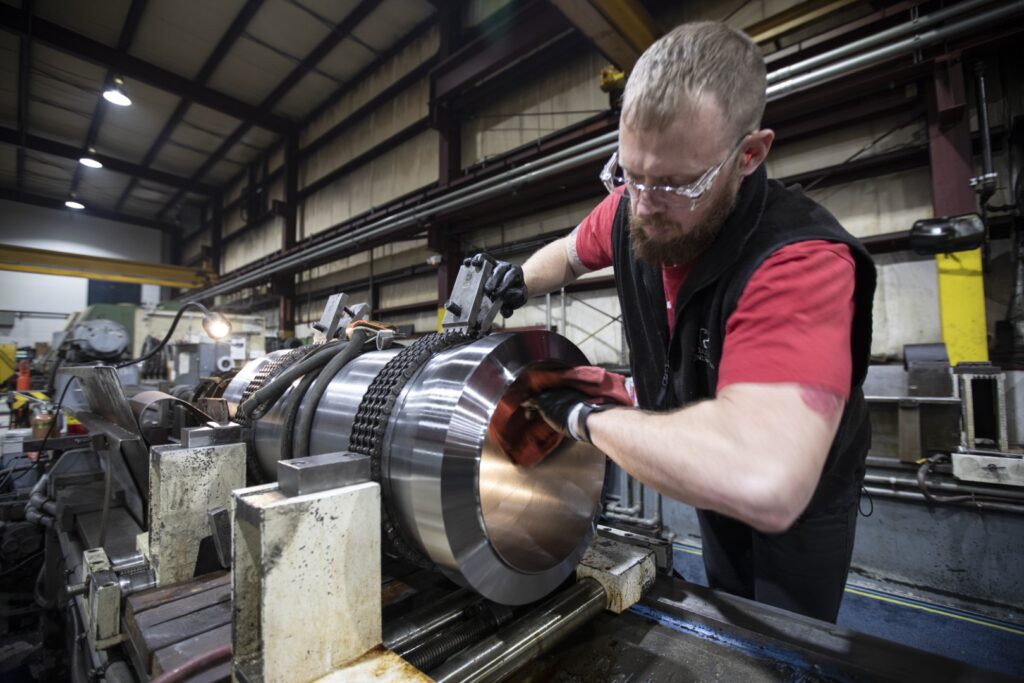
Used by the most demanding industries
Many industries request an HSLA steel that can hold up to extreme amounts of stress and have distinct mechanical properties to meet the needs required for applications like:
| Automotive parts | Need high strength and relatively high formability |
| Aircraft structures | Endure speed and pressure differences which require high tensile strength |
| Bridges and suspensions | Undergo extreme tension from both vehicle weight and weather |
| Mining | Demands a high degree of durability to withstand tremendous tensile stress |
These industries produce the following types of products with Spuncast HSLA steels:
- High-strength roll bodies
- Hydraulic cylinders
- Industrial machinery
- Road building equipment
- Anywhere rugged service is required